Why 2026 is a breakthrough year for robotics
The year 2026 marks a major turning point in robotics development. What was once experimental is now entering real-world applications at scale. Businesses and consumers are no longer asking if robotics will transform industries, but how fast.
Technological convergence is the main driver behind this shift. Robotics is no longer a standalone field — it integrates artificial intelligence, sensors, cloud computing, and edge processing into unified systems.
This integration allows robots to perform more complex tasks with higher accuracy and autonomy. As a result, companies are rapidly adopting new solutions to stay competitive.
“2026 is the year robotics moved from innovation labs into everyday business operations.”
This transition is creating massive opportunities across multiple sectors.
AI powered robots are becoming standard
Artificial intelligence is now at the core of modern robotics. In 2026, robots are no longer just programmable machines — they are adaptive systems capable of learning and improving over time.
AI allows robots to process data in real time, recognize patterns, and make decisions without human intervention. This dramatically increases efficiency in dynamic environments.
For example, warehouse robots can now optimize routes on the fly, while service robots adjust behavior based on customer interaction.
Key advantages of AI robotics
-
real time decision making
-
improved accuracy
-
adaptability to changing environments
-
reduced human supervision
This shift is redefining what automation means in practice.
Humanoid robots entering real environments
Humanoid robots are no longer limited to demonstrations. In 2026, they are starting to work alongside humans in real business environments.
These robots are designed to replicate human movements and interactions, making them ideal for customer-facing roles and complex manual tasks.
Retail, hospitality, and healthcare are among the first sectors to test humanoid integration.
Examples of humanoid applications
-
customer service assistants
-
hotel reception robots
-
healthcare support staff
-
retail floor assistants
While still evolving, humanoid robotics represents one of the most exciting areas of innovation.
Autonomous robots in logistics and delivery
Autonomous robots are transforming logistics in 2026. From warehouses to last-mile delivery, automation is improving speed and reducing costs.
Self-driving delivery robots and drones are becoming more common, especially in urban areas. These systems can operate with minimal human input.
Warehouses are also becoming highly automated, with robots handling picking, packing, and transportation tasks.
Key benefits of autonomous logistics
-
faster delivery times
-
lower operational costs
-
increased efficiency
-
reduced human error
This trend is reshaping supply chains globally.
Robotics in healthcare and surgery
Healthcare robotics is advancing rapidly in 2026. Robots are now assisting in surgeries, diagnostics, and patient care.
Precision is one of the biggest advantages. Surgical robots can perform complex procedures with minimal invasiveness and higher accuracy.
Robots are also used for rehabilitation and elderly care, improving quality of life for patients.
Main healthcare applications
-
robotic surgery systems
-
rehabilitation robots
-
patient monitoring
-
automated diagnostics
“Robotics in healthcare is not replacing doctors — it is enhancing their capabilities.”
This technology is expected to grow significantly in the coming years.
Collaborative robots working with humans
Collaborative robots, or cobots, are designed to work alongside humans. In 2026, they are becoming a standard in manufacturing and beyond.
Unlike traditional industrial robots, cobots are safe and flexible. They can adapt to different tasks and environments.
This makes them ideal for small and medium-sized businesses that need automation without complex infrastructure.
Advantages of cobots
-
safe human interaction
-
flexibility in tasks
-
lower implementation cost
-
easy integration
Cobots are making robotics accessible to a wider range of companies.
Robotics in agriculture and food production
Agriculture is undergoing a technological revolution. In 2026, robots are used for planting, harvesting, and monitoring crops.
These systems increase efficiency and reduce dependency on manual labor. They also improve accuracy in resource usage.
Food production is also becoming automated, with robots handling preparation and packaging.
Applications in agriculture
-
automated harvesting
-
crop monitoring drones
-
precision farming
-
robotic food processing
This innovation is critical for meeting global food demand.
Smart home robots and consumer adoption
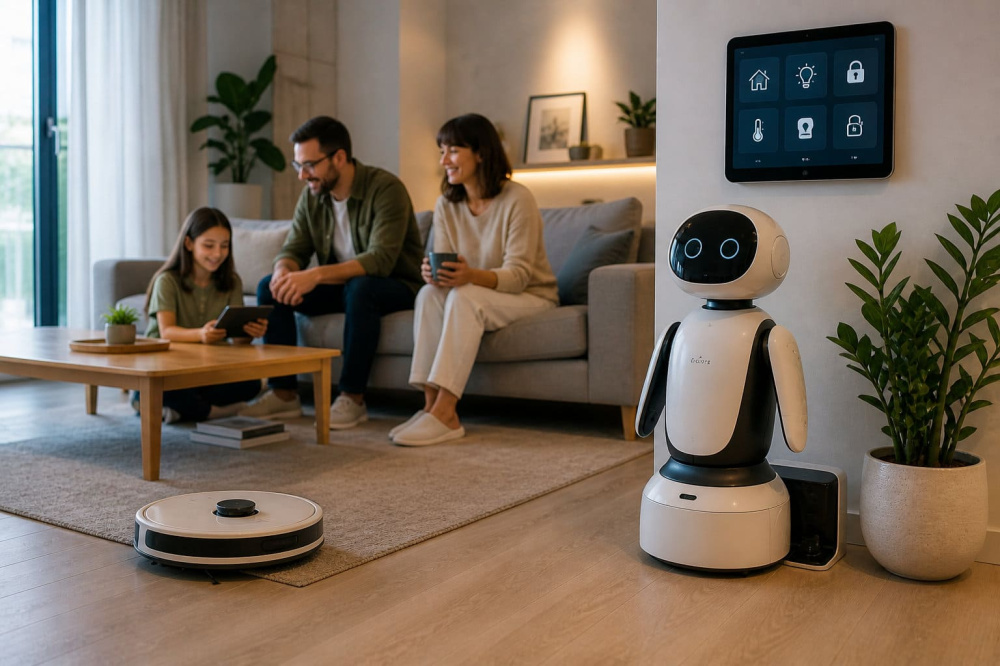
Robotics is not limited to business — it is entering homes at a rapid pace. In 2026, smart home robots are becoming more advanced and affordable.
Cleaning robots, personal assistants, and security systems are now equipped with AI capabilities.
These devices can learn user behavior and adapt to daily routines.
Popular consumer robots
-
robotic vacuum cleaners
-
home security robots
-
personal assistant robots
-
smart kitchen devices
This trend shows that robotics is becoming part of everyday life.
Challenges facing new robotics technologies
Despite rapid progress, robotics still faces challenges in 2026.
High development costs remain a barrier for some companies. Integration with existing systems can also be complex.
There are also concerns about data security and ethical implications.
Main challenges
-
high initial investment
-
technical complexity
-
cybersecurity risks
-
workforce adaptation
“Innovation in robotics is moving fast, but responsible implementation is just as important.”
Addressing these challenges is key to sustainable growth.
Investment trends in robotics innovations
Investors are активно focusing on robotics in 2026. The sector attracts funding due to its scalability and long-term potential.
Startups developing AI-powered robots are particularly attractive. Venture capital is flowing into automation, healthcare robotics, and logistics solutions.
Large corporations are also investing heavily to stay competitive.
Key investment areas
-
AI driven robotics
-
autonomous delivery systems
-
healthcare technologies
-
industrial automation
This financial support is accelerating innovation.
What businesses can learn from robotics trends
Businesses that understand robotics trends can gain a competitive advantage. In 2026, staying updated is essential for growth.
Companies should focus on identifying processes that can be automated. Even small improvements can lead to significant gains.
Adopting robotics does not always require large investments — starting small can be effective.
Strategic steps for businesses
-
analyze operations
-
identify automation opportunities
-
test small solutions
-
scale gradually
This approach reduces risk and maximizes results.
Future outlook for robotics technologies
The future of robotics looks extremely promising. In the coming years, robots will become more intelligent, affordable, and widespread.
Advancements in AI and hardware will continue to push the boundaries of what robots can do.
Industries that adopt these technologies early will lead the market.
“The next decade will be defined by how effectively businesses integrate robotics into their strategies.”
This makes robotics one of the most important technological trends of our time.
Conclusion new robotics technologies in 2026
Robotics in 2026 is entering a new phase of development. Breakthrough innovations are transforming industries and creating new opportunities.
From AI-powered systems to autonomous robots, the technology is becoming more practical and accessible.
Businesses and individuals who embrace these changes will benefit the most.
Robotics is no longer the future — it is the present shaping the world around us.
FAQ
What are the latest robotics technologies in 2026
The latest robotics technologies include AI powered robots humanoid robots autonomous delivery systems collaborative robots and advanced healthcare robotics
How is artificial intelligence used in robotics
AI allows robots to analyze data learn from experience make decisions in real time and adapt to changing environments without human intervention
Are humanoid robots already used in real life
Yes in 2026 humanoid robots are being tested and used in industries like retail hospitality and healthcare for customer interaction and support tasks
What industries benefit the most from robotics
Industries such as manufacturing logistics healthcare agriculture and retail benefit the most from robotics due to increased efficiency and automation
What are collaborative robots or cobots
Cobots are robots designed to work safely alongside humans helping with tasks while improving productivity and reducing physical workload
What challenges does robotics face in 2026
Key challenges include high costs system integration complexity cybersecurity concerns and the need for workforce adaptation